PCOS and Infertility: Can Women With PCOS Get Pregnant Naturally?
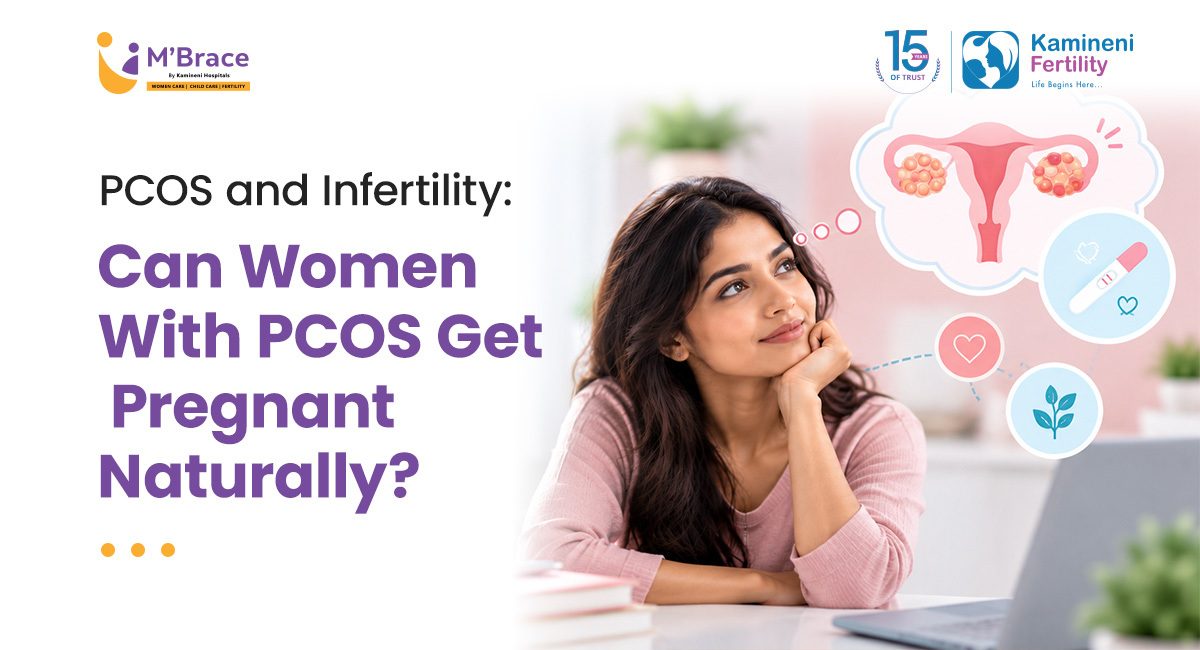
Maybe a scan report just said "PCOS" or "PCOD." Maybe a relative has asked if you can have children. It's a worrying moment, and the internet rarely helps. Here's the honest answer. Many women with PCOS get pregnant naturally. PCOS mainly affects how often you release an egg. So it can take longer. When you need help, simple tablets often work first. IVF is rarely the first step.
Kamineni Fertility is an ICMR-recognised fertility centre in Hyderabad. For 15+ years, we've helped couples with PCOS and infertility. We've evaluated and treated 17,000+ couples and helped deliver 14,000+ babies at our King Koti and L B Nagar centres.
Below, you'll learn how to spot ovulation and what you can change yourself. You'll also see when to get checked and what care usually looks like.
Can Women With PCOS Get Pregnant Naturally?
Yes, often. PCOS makes ovulation irregular, but it rarely stops it for good. The 2023 global PCOS guideline says women should be reassured. Pregnancy often happens naturally or with simple tablets. This is most likely when PCOS is found early.
Long-term data agrees. A large Finnish study followed women up to age 46. Among women with PCOS, 75% had at least one child. For women without PCOS, it was 79%. Families were slightly smaller on average. So if you're wondering whether women with PCOS get pregnant naturally, the evidence says yes.
Why Can It Take Longer?
Each ovulation is one chance to conceive. A woman with regular cycles ovulates about 12 times a year. With PCOS, you may ovulate far less often. Fewer chances means it can take longer. It doesn't mean it can't happen.
Can PCOS Get Easier With Age?
For some women, yes. A 2025 review notes that cycles often become more regular around age 35. That may improve the chance of natural pregnancy. But egg numbers also fall with age, so waiting it out isn't a plan. Talk to a doctor instead.
How Are PCOS and Infertility Linked?
The link between PCOS and infertility comes down to ovulation. Ovulation is when an ovary releases an egg. In PCOS, hormone changes stop eggs from growing on time. So they aren't released every month. Three things usually drive this:
- More "Male" Hormones: Raised androgens, as doctors call them, slow down egg growth.
- Insulin Resistance: Your body doesn't use insulin well, which pushes those hormones up.
- Stuck Egg Sacs: Follicles, the tiny sacs where eggs grow, start to grow and then stop.
That's why most PCOS fertility care aims to help you ovulate. For more on the condition itself, read about polycystic ovarian disease.
Is PCOS Now Called PMOS?
Yes. In May 2026, a global expert group renamed PCOS in The Lancet. Its new name is polyendocrine metabolic ovarian syndrome, or PMOS. It's the same condition with the same treatments. Doctors will use both names for a few years.
The old name suggested cysts on the ovaries. Those "cysts" are really follicles that stopped growing. The new name points to hormones and metabolism instead. It affects about 1 in 8 women worldwide. In India, one review of studies put it at about 11% of women.
So when you read about PMOS and infertility, it's the same topic as this one. Your doctor may start writing PMOS on reports. Nothing about your fertility plan changes because of it. The name is new. The care is not.
How Can You Tell If You're Ovulating With Irregular Periods?
Start by tracking your cycle length for a few months. Then use signs and simple tests together. No single method is perfect with PCOS. Your doctor can confirm it with a blood test or a scan. Here's what to track:
- Cycle Diary: Note the first day of each period, so you and your doctor can see the pattern.
- Fertile Mucus: Clear, stretchy mucus like raw egg white often appears just before ovulation.
- Ovulation Kits With Care: Kits can mislead in PCOS, as the LH hormone is often high.
- Progesterone Blood Test: This test, timed by your doctor, shows whether you ovulated.
- Follicle Scan: A scan can watch an egg sac grow and release its egg.
One safety tip matters here. If your period is late, take a pregnancy test before any medicine to bring on a period. Many women with PCOS are used to skipping periods and can miss an early pregnancy.
What Can You Do Yourself to Improve Your Pregnancy Chances?
A healthy routine can help your body ovulate more often. But no diet, supplement or home remedy cures PCOS. Think of lifestyle as support for your care, not a test you pass or fail. It works best alongside medical advice. Small steps count.
- Balanced Meals: Home meals with vegetables, protein and whole grains help steady blood sugar.
- Regular Movement: Brisk walks, yoga or cycling on most days help your body use insulin better.
- Good Sleep: Sleep problems are more common with PCOS, so mention them to your doctor.
- No Smoking: Smoking harms fertility, so stopping helps both partners.
On weight, here's what the evidence says. If you carry extra weight, losing even 5% to 10% can ease PCOS symptoms. No single diet works better than the others. If you're slim, weight loss isn't the answer. Nobody should tell you to "just lose weight."
Supplements like inositol are popular. The guideline says their benefit for ovulation is limited, so ask your doctor before you spend on them.
Does PCOS Mean You'll Need IVF?
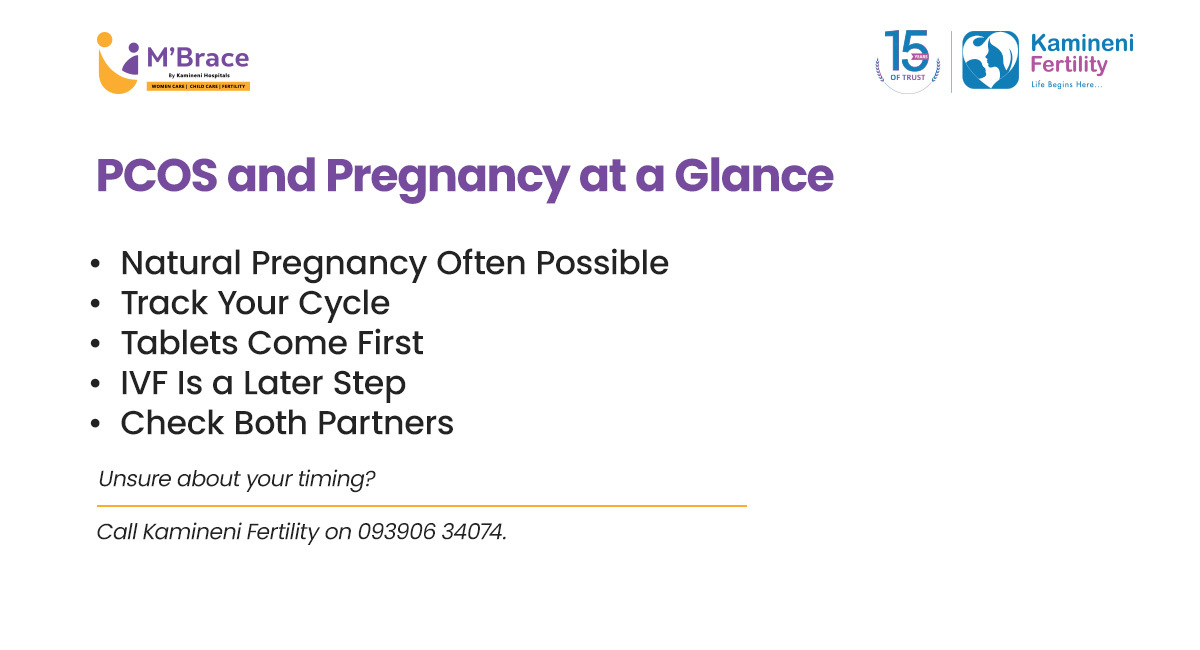
Usually not. Most women start with lifestyle support and tablets. The 2023 guideline puts IVF third. It's used only when simpler steps haven't worked. Many women conceive long before that stage. Your doctor moves up a step only if needed. Here's the usual order:
| Step | What It Involves | When It's Used |
|---|---|---|
| 1. Lifestyle support | A healthy routine, with weight support if needed | From the start, for everyone |
| 2. Letrozole tablets | A short course of tablets to help release an egg | The first medicine for most women |
| 3. Injections or ovarian surgery | Low dose hormone shots, or keyhole surgery on the ovary | If tablets don't work |
| 4. IVF | Egg and sperm joined in a lab | If other steps haven't worked |
Ovulation induction is medicine that helps you release an egg. Your doctor may pair it with timed sex or IUI. In IUI, prepared sperm goes inside the womb near ovulation. You can read more about ovulation induction.
When Should You See a Fertility Specialist?
If you have PCOS and irregular periods, you don't need to wait a full year. ASRM usually advises a check after 12 months of trying if you're under 35. If you're 35 or older, it's 6 months. That timeline is for couples with no known cause. With PCOS, you already have one.
Book a check sooner if:
- Your cycles are often longer than 35 days, or very hard to predict.
- You haven't had a period for three months or more.
- You're 35 or older.
- You or your partner has another known fertility issue.
Both partners need checks. The guideline suggests a semen analysis and a tubal test before treatment. A semen analysis checks sperm count, movement and shape. A tubal test checks whether the fallopian tubes are open. That way, nothing gets missed.
Searching for the best fertility clinic near me? Pick one that checks both of you from the first visit. A fertility hospital in Hyderabad with its own lab can run most tests in one place. Start with a basic fertility evaluation.
Are There Pregnancy Risks With PCOS?
Most women with PCOS have healthy pregnancies. Some risks are higher, though, so early care matters. The US FDA notes higher rates of miscarriage, gestational diabetes and preterm birth with PCOS. Gestational diabetes is high blood sugar that starts in pregnancy.
The 2023 guideline treats PCOS as a higher risk condition in pregnancy. So doctors watch these pregnancies more closely. You may have an early sugar test and regular check-ups. You'll also get help to gain a healthy amount of weight.
None of this should scare you. It's routine. It simply means your care team keeps a closer eye on you and your baby.
How Does Kamineni Fertility Support Women With PCOS?
We start with the simplest step your reports support. Your doctor checks both partners, explains the plan and moves to the next step only if needed. Egg scans, IUI and IVF are all in one place. You won't be pushed into a step you don't need.
Dr. Vasundhara Kamineni, our Medical Director, leads the team. Our care follows the global PCOS guideline. In our experience at Kamineni Fertility, many women arrive afraid they'll need IVF. Many leave relieved that the first step is usually much simpler.
Couples comparing the best fertility centre in Hyderabad often want honest advice first. That's where we start. Does your best fertility clinic near me search point to central Hyderabad? Our fertility centre in King Koti is close to the Koti bus terminal. You can also check our PCOS treatment costs in Hyderabad before you visit.
Get PCOS Fertility Care in Hyderabad at Kamineni Fertility
PCOS slows ovulation, but it rarely closes the door. Testing early saves time. It saves worry too. For clear advice on PCOS and infertility, visit our fertility centre in King Koti or our L B Nagar branch.
Looking for the best fertility centre in Hyderabad, or a fertility hospital in Hyderabad you can trust? Many couples start with one visit.
- King Koti: 4-1-1226, Boggulakunta, King Koti, Abids, Hyderabad 500001
- L B Nagar: OP No. 8, Kamineni Hospitals, L B Nagar, Hyderabad 500068
Call 093906 34074 or book a consultation online for the best fertility care near me.
Disclaimer: This content is for informational purposes only. It does not replace medical advice. Please consult a qualified fertility specialist for personalised guidance. Fertility treatments do not guarantee pregnancy, and results vary from person to person.
Frequently Asked Questions
Can I get pregnant with PCOS if my periods are regular?
Yes, and your chances are often better. Regular periods usually mean you're ovulating. Still, see a doctor if you've tried for 12 months, or 6 months if you're 35 or older.
Is PCOS the same as PCOD?
Yes. In everyday use in India, both names mean the same condition. Since 2026, the official name is PMOS. So articles on PMOS and infertility cover the same topic.
Do women with PCOS need a special diet?
No single diet works best, according to the 2023 guideline. Balanced meals and regular activity matter more than any strict plan. Ask your doctor before you cut out whole food groups.
Does metformin help women with PCOS get pregnant?
It can help some women, mainly those with insulin resistance. But the guideline says letrozole works better for ovulation. Your doctor may use metformin with other tablets.
Does PCOS go away after pregnancy?
No. PCOS is long-term and has no cure. But symptoms can change over time. Keep up regular checks for sugar, weight and blood pressure after your baby arrives.
Does Kamineni Fertility treat PCOS-related infertility in Hyderabad?
Yes. Kamineni Fertility offers PCOS checks, ovulation support, IUI and IVF at King Koti and L B Nagar. Call 093906 34074 to book a visit.
Click Here to get more information on:
PCOS Fertility Consultation
Book Your Fertility Consultation
For inquiries/ appointment, call us on:
 +91 93906 34074