Best Time for IUI: How Ovulation Timing Guides Treatment
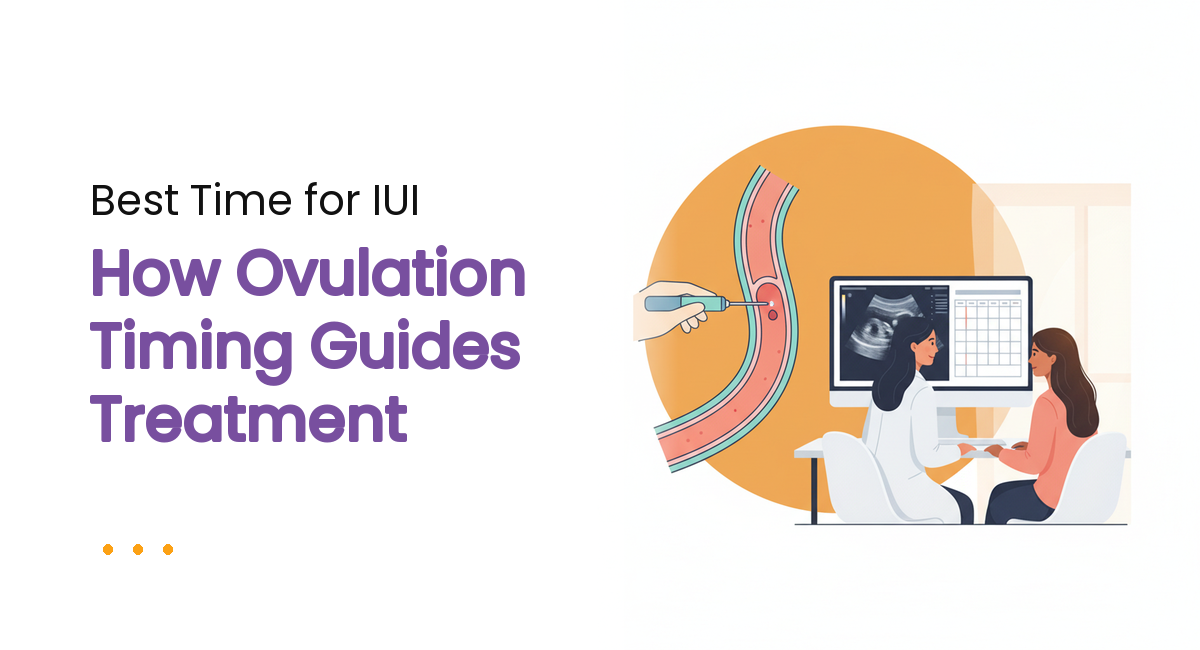
The best time for iui can feel confusing when ovulation tests, injections and clinic visits do not seem to match. Many people worry that arriving too early or too late could reduce their chance of success. IUI is usually planned close to ovulation, often before or within 24 hours of ovulation, but the exact appointment depends on follicle growth, hormone results and whether medication is used. Kamineni Fertility Centre explains this timing through monitored cycles, clear counselling and patient-first fertility care. The team is led by Dr. Vasundhara Kamineni, Head of Obstetrics & Gynaecology, and provides IUI alongside ovulation induction, IVF and related services. Read on for the cycle timeline, trigger-shot role, monitoring points and questions to ask before booking your procedure. Consult a qualified healthcare professional for medical decisions.
Key takeaways
- IUI is planned close to ovulation, with timing adjusted after scans, hormone tests and treatment response.
- A monitored cycle may include baseline testing, medication, follicle checks and a trigger injection before insemination.
- Natural ovulation and medication-assisted ovulation require different timing decisions, so home testing alone may not be enough.
- Kamineni Fertility Centre provides IUI with transparent counselling and follow-up planning.
- Call +91 94910 68784 to discuss your cycle plan with a qualified fertility team.
How do you identify the best time for IUI?
The best time for iui is close to ovulation, usually before or within 24 hours of ovulation, when monitoring shows that the cycle is ready. Intrauterine insemination places prepared sperm inside the uterus near the fertile window. The appointment is not chosen from the calendar alone.
A fertility specialist may review your menstrual pattern, ultrasound findings and hormone tests. If ovulation is expected naturally, blood or urine testing can help identify the hormone rise. The Intrauterine Insemination (IUI) care plan can then be adjusted to your response rather than copied from another person’s cycle.
| Timing factor | What it tells the team |
|---|---|
| Ovulation signs | Whether the fertile window is approaching |
| Follicle size | Whether a leading follicle appears ready |
| Hormone results | Whether ovulation is beginning or has occurred |
| Trigger injection | When planned ovulation is expected after treatment |
According to the National Institutes of Health research on IUI timing, ovulation commonly follows the start of the luteinising hormone surge or a trigger injection within a defined clinical window. Your clinician uses this information with your scan findings.
What happens during an IUI cycle?
An IUI cycle commonly starts on the first day of menstruation, followed by baseline testing and a plan for monitoring. The exact schedule changes with natural ovulation, stimulated ovulation and your response to treatment.
- Day one usually marks the start of menstrual bleeding and the baseline assessment.
- Medication may be prescribed during the early cycle when ovulation support is needed.
- Ultrasound monitoring checks follicle growth and the uterine lining.
- Blood or urine tests may help confirm the changing hormone pattern.
- A trigger injection may be advised when the leading follicle is ready.
- The IUI appointment is scheduled around the expected ovulation window.
The Ovulation Induction service may be considered when medication is needed to support follicle development. It does not mean every patient follows the same dose or appointment pattern. Your specialist decides the plan after reviewing your medical history and test results.
| Cycle stage | Typical clinical focus |
|---|---|
| Menstrual start | Baseline review and cycle planning |
| Early cycle | Medication when stimulation is appropriate |
| Mid-cycle | Ultrasound and hormone monitoring |
| Ovulation window | Trigger decision and insemination timing |
For questions about the wider treatment pathway, What are the different treatment available for Fertility? can help you prepare for a consultation. The right next step depends on both partners’ evaluation, not on timing alone.
How does a trigger injection change IUI timing?
A trigger injection is used in some treatment cycles to help plan ovulation, so the IUI appointment can be arranged around the expected release of an egg. It is given only when monitoring shows that the cycle is suitable.
The trigger commonly contains human chorionic gonadotropin, also called hCG. It is usually considered when the leading follicle reaches the size judged ready by the treating clinician. Ovulation may then be expected within a clinical window, and the IUI appointment is placed accordingly.
Do not change the injection time or appointment without speaking with your care team. A missed dose, an uncertain injection time or new symptoms can alter the plan. According to the National Institutes of Health research on hormone-based IUI scheduling, a single hormone threshold does not always schedule every cycle accurately. That is why scans and clinical review matter.
If sperm preparation is part of your plan, ask how the sample will be handled before insemination. The guide How is the sperm processed for IVF explains a related laboratory process and may help you form practical questions for your appointment.
What should you do if ovulation occurs earlier or later?
If ovulation appears earlier or later than expected, contact the fertility team promptly because the appointment may need review. Do not rely on a calendar prediction or home test result alone when a monitored cycle is underway.
Keep a record of bleeding, test results, injection time and symptoms. Share this information with the clinic. The team may use repeat ultrasound, hormone testing or a revised appointment to understand the cycle better.
- Call if you are unsure whether an injection was taken correctly.
- Ask whether the IUI appointment still matches the scan findings.
- Report severe pain, heavy bleeding or symptoms that concern you.
- Ask what follow-up test is planned after insemination.
Fertility planning may also include other services. If you are considering future family planning, Know the best time to freeze your eggs offers a separate discussion point. It should not replace an individual consultation about your current IUI cycle.
How can you prepare for the IUI appointment?
You can prepare by confirming the appointment time, medication instructions, sample requirements and follow-up plan with the clinic before the expected ovulation window.
Bring previous reports and a list of medicines or supplements you take. Ask whether your partner needs to attend, how the semen sample should be provided, and what happens if the sample is delayed. These details reduce last-minute uncertainty.
Kamineni Fertility Centre has provided fertility care for over a decade and has delivered more than 14,000 babies. Its approach is built on ethics, honesty, accountability and transparency, with care led by Dr. Vasundhara Kamineni and supported by fertility specialists and an embryologist. The centre also reports 1 lakh+ verified ratings on Google.
Patients can also ask about Mother & Child Care when discussing care beyond the fertility procedure. For service details and appointment planning, Best Fertility Centre in Hyderabad follows the same consultation-led planning steps. Contact the centre at +91 94910 68784 for guidance. Consult a qualified healthcare professional for medical decisions.
IUI works best when the insemination is planned around your actual ovulation, not a fixed calendar day. Monitoring, follicle assessment, hormone results and any trigger injection help the team choose the appointment. Natural and medication-assisted cycles may follow different plans. Kamineni Fertility Centre brings over a decade of fertility care, more than 14,000 babies delivered and 1 lakh+ verified Google ratings to its patient-first approach. Call +91 94910 68784 to discuss your cycle, reports and next step with a qualified fertility team. Consult a qualified healthcare professional for medical decisions.
FAQs
When is the best time for IUI after ovulation starts?
IUI is usually planned before or within 24 hours of ovulation. The exact appointment depends on ultrasound findings, hormone results and whether a trigger injection is used.
How many days after the trigger shot is IUI done?
IUI is scheduled around the expected ovulation window after the trigger shot. Your fertility specialist sets the appointment based on follicle development, injection timing and the treatment plan.
Can IUI be done without a trigger injection?
Yes, some cycles are timed around natural ovulation without a trigger injection. Blood tests, urine tests and ultrasound monitoring may help identify the appropriate appointment.
What happens if I miss my IUI appointment?
Call the fertility clinic as soon as possible if you miss or may miss the appointment. The team will review your injection time, test results and ovulation status before advising on the next step.
How long does an IUI procedure take?
The insemination itself is usually brief once the semen sample is ready. Your clinic will explain sample preparation, the procedure and the follow-up plan before treatment.
How many IUI cycles should I try?
Many fertility providers discuss three IUI cycles before considering another treatment, but the appropriate number depends on age, diagnosis, ovarian response and both partners’ evaluation.