Late Period? Causes, Early Pregnancy Signs, and When to Take a Test?
A late period can bring on a wave of questions. Is it pregnancy? Is something off with your cycle? Should you be worried?
A late period has many possible causes, and pregnancy is just one of them. Studies suggest that irregular or delayed periods affect between 14 and 25 percent of women of reproductive age globally. Most of the time, a delayed cycle is temporary and linked to something manageable, such as stress, a change in routine or a hormonal shift.
At Kamineni Fertility, we specialise in identifying and treating the conditions behind late and irregular periods, from PCOS and hormonal imbalance to thyroid disorders and ovulatory dysfunction. As an ICMR-recognised fertility centre in Hyderabad with 15+ years of experience and 17,000+ cases handled, our specialists at King Koti and L B Nagar provide complete hormonal assessments, cycle evaluations and personalised treatment plans. You leave with answers, not more uncertainty.
Read on for a clear breakdown of late period causes, early signs of pregnancy and when to take a test.
What Does a Late Period Actually Mean?
A period is considered late if it has not started within seven days of its expected date. A missed period means no bleeding at all in a cycle. Both can happen for reasons related to pregnancy and for reasons that have nothing to do with it.
A normal menstrual cycle runs between 21 and 35 days. Variation of a few days each month is completely normal. If your cycle is irregular already, what counts as late may be harder to identify, which is one reason tracking your cycle regularly matters.
How Late Is Considered Late?
- If your period is one to five days late and your cycle is usually regular, monitor for a few more days.
- If it is seven or more days late, take a home pregnancy test.
- If your period is two or more weeks late and a test is negative, speak to a doctor.
What Are the Common Non-Pregnancy Causes of a Late Period?
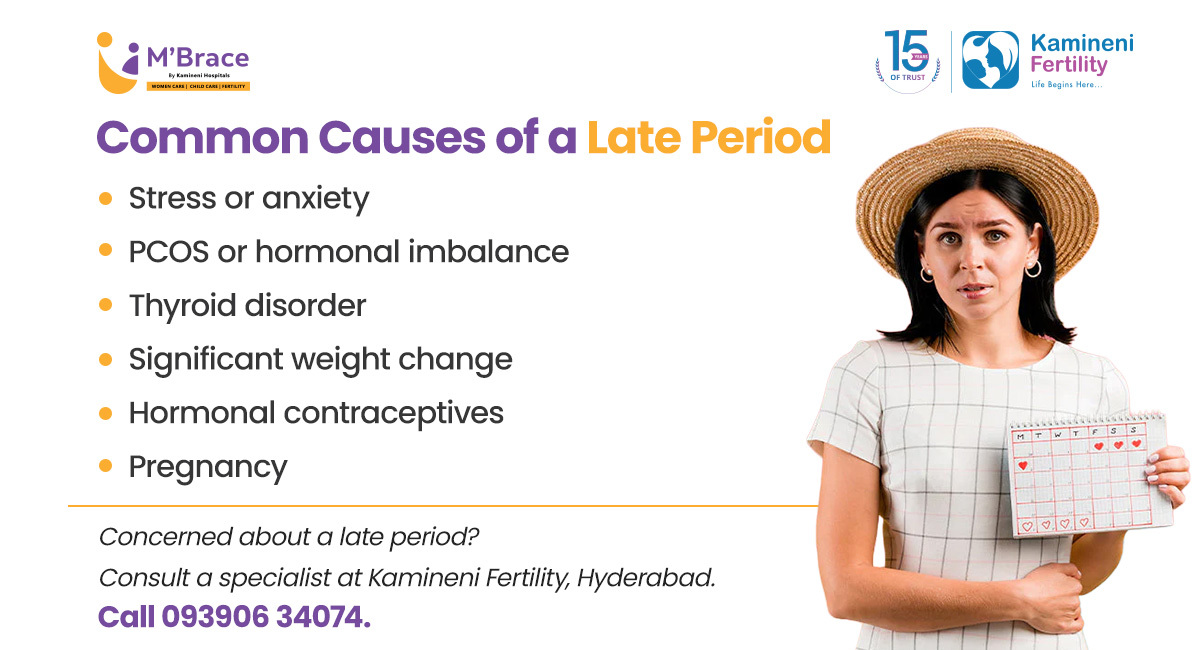
Late period signs do not automatically mean pregnancy. Several conditions and lifestyle factors can delay or stop your cycle altogether. The most common late period causes include:
- Stress: High physical or emotional stress raises cortisol levels, which can suppress the hormones that trigger ovulation. A delayed ovulation means a delayed period.
- Polycystic Ovary Syndrome (PCOS): PCOS is a hormonal condition that disrupts the regularity of ovulation. It affects approximately one in five women of reproductive age in India and is one of the most common reasons for irregular or missed periods.
- Thyroid disorders: Both an overactive and underactive thyroid can interfere with the menstrual cycle. The thyroid regulates many hormones, including those that control your cycle.
- Significant weight change: Losing or gaining weight rapidly affects oestrogen levels, which can delay or stop periods altogether.
- Excessive exercise: Intense physical training can suppress reproductive hormones, particularly in women with low body fat.
- Hormonal contraceptives: Starting, stopping or changing hormonal birth control can disrupt your cycle for several months.
- Perimenopause: Women in their late thirties and forties may experience irregular cycles as hormone levels begin to shift.
If your period is consistently late or absent across multiple cycles and pregnancy has been ruled out, a hormonal evaluation at a fertility clinic in Hyderabad can identify the underlying cause.
When Should You Not Panic About a Late Period?
Not every late period signals a problem. There are several situations where a delayed cycle is a normal, temporary response and does not require medical attention right away.
You are unlikely to need immediate concern if:
- Your period is fewer than seven days late and you have been under unusual stress recently
- You recently started or stopped hormonal contraception, as your cycle can take two to three months to regulate
- You have just returned from travel across time zones, which can temporarily disrupt your hormonal rhythm
- You have recently changed your exercise routine significantly or experienced a sudden weight shift
- You have had one irregular cycle but your previous cycles were consistently on time
Late period signs in these situations are most often a short-term response to a change in your body or routine. Monitor for another week. If the period does not arrive, or if other symptoms appear, that is the right time to take a test or speak to a specialist at the best fertility clinic near me in your area.
What does warrant attention is when a late or missed period occurs repeatedly, alongside symptoms such as unusual hair growth, acne, pelvic pain or fatigue. These patterns suggest an underlying hormonal condition that needs proper evaluation, not watchful waiting alone.
What Are the Early Signs of Pregnancy After a Missed Period?
The early signs of pregnancy are caused by hormonal changes that begin within days of conception. Not every woman experiences all of them, and some symptoms overlap with PMS, which makes it harder to tell the difference before taking a test.
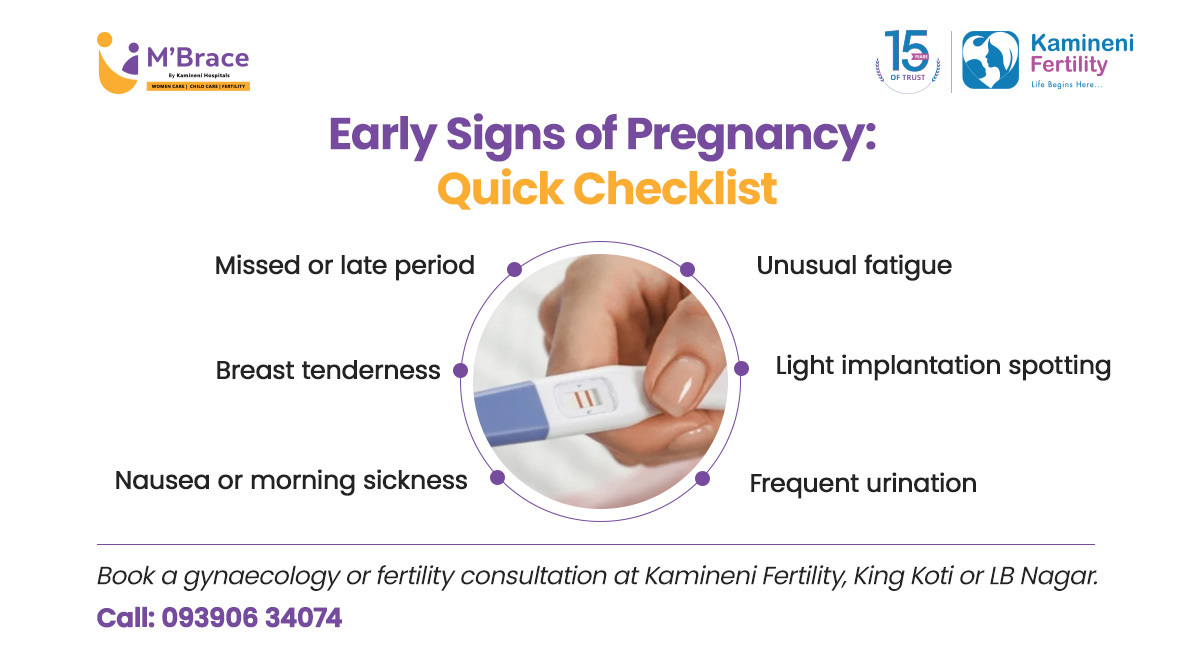
The most common early signs of pregnancy include:
- Missed or late period: The most reliable early sign, particularly if your cycle is usually regular.
- Breast tenderness: Breasts may feel heavier, sore or more sensitive than usual. Unlike PMS-related soreness, this tends to persist rather than ease as days pass.
- Nausea: Often called morning sickness, nausea can occur at any time of day and typically begins four to six weeks after conception.
- Fatigue: Rising progesterone levels in early pregnancy cause significant tiredness, often from the first two weeks after conception.
- Frequent urination: The kidneys begin working harder early in pregnancy, leading to more frequent trips to the bathroom.
- Implantation bleeding: Light spotting, usually pink or brown, that occurs six to twelve days after fertilisation when the embryo attaches to the uterine lining. Research indicates that around 25 percent of pregnant women experience this. It is lighter and shorter than a normal period.
- Heightened sense of smell: Many women report strong sensitivity to certain smells as an early sign of pregnancy.
- Mild cramping: Lower abdominal cramps without heavy bleeding can occur as the uterus begins to change in early pregnancy.
How Are Early Pregnancy Signs Different From PMS Signs?
Many early signs of pregnancy overlap with premenstrual symptoms, which makes it genuinely difficult to tell the two apart without taking a test. The table below shows the key differences.
| Symptom | PMS | Early Pregnancy |
|---|---|---|
| Breast tenderness | Eases before period starts | Persists and may increase |
| Cramping | Starts with period flow | Mild, without heavy bleeding |
| Spotting | Absent | Light implantation bleeding possible |
| Nausea | Uncommon | Common from weeks 4 to 6 |
| Fatigue | Mild | Often more pronounced |
| Period | Arrives on time | Absent or significantly delayed |
If several of these signs are present and your period is late by a week or more, taking a home pregnancy test is the clearest next step.
When Is the Right Time to Take a Pregnancy Test?
The right time to take a home pregnancy test is on the first day of your missed period or later. Tests detect human chorionic gonadotropin (hCG), a hormone the body produces after a fertilised egg implants in the uterus.
Testing too early can give a false negative because hCG levels may not yet be high enough to detect. Use your first morning urine for the most concentrated and accurate result.
Home pregnancy tests are 97 to 99 percent accurate when used correctly and taken after a missed period. If you test before your period is due, accuracy drops, so waiting gives you a much clearer reading.
Home Pregnancy Test Versus Blood Test: Which Is More Accurate?
| Test Type | When to Use | What It Measures |
|---|---|---|
| Home urine test | From the first day of a missed period | Presence of hCG in urine |
| Blood test at a clinic | Can detect pregnancy earlier, even before a missed period | Exact hCG level in the blood |
A blood test at a clinic is more sensitive than a home test and can detect pregnancy earlier. Your doctor may recommend a blood test if symptoms are strong but the home test result is unclear.
- If your home test is negative but your period has not arrived, repeat the test after a few days.
- If the second test is also negative and your period remains absent, a blood test gives a definitive answer.
- A positive result on any test should be confirmed with a clinical appointment for an ultrasound and further guidance.
When Should a Late Period Be Checked by a Doctor?
A single late period, especially after a stressful month or a change in routine, does not usually require immediate medical attention. You should consult a gynaecologist or fertility specialist if:
- Your period is more than two weeks late and a pregnancy test is negative
- You have missed two or more consecutive periods and are not pregnant
- Your periods have always been irregular and you are now trying to conceive
- You have other symptoms alongside a late period, such as unusual hair loss, acne, pelvic pain, weight changes or persistent fatigue
- You have been trying to conceive for 12 months or longer, or for 6 months if you are over 35, without a positive result
Late period causes linked to conditions like PCOS, thyroid disorders or hormonal imbalance respond well to early diagnosis and treatment. A fertility evaluation at the best fertility hospital in Hyderabad gives your doctor the full picture needed to identify the cause and recommend the right treatment path.
If you have been searching for the best gynaecologist hospital in Hyderabad or the best fertility clinic near me, Kamineni Fertility offers complete hormonal assessment, cycle evaluation and gynaecological care at both King Koti and L B Nagar.
Book Your Consultation with a Specialist at Kamineni Fertility Now!
A late period deserves a clear answer, not weeks of uncertainty. Whether you are trying to conceive, managing an irregular cycle or simply need a reliable first evaluation, the team at Kamineni Fertility is here to guide you.
As an ICMR-recognised fertility centre and a trusted name as the best fertility hospital in Hyderabad, Kamineni Fertility has 15+ years of experience, 17,000+ cases handled and 14,000+ babies delivered. We provide fertility evaluation, hormonal assessment and personalised gynaecological care guided by experienced specialists.
Call us now at 093906 34074 and book your consultation with our experts at Kamineni Fertility.
- King Koti Branch 4-1-1226, Boggulakunta, King Koti, Abids, Hyderabad - 500001.
- L B Nagar Branch OP No. 8, Kamineni Hospitals, L B Nagar, Hyderabad - 500068.
Book your consultation at Kamineni Fertility:
 +91 93906 34074