PCOS Renamed as PMOS: What's the Reason?
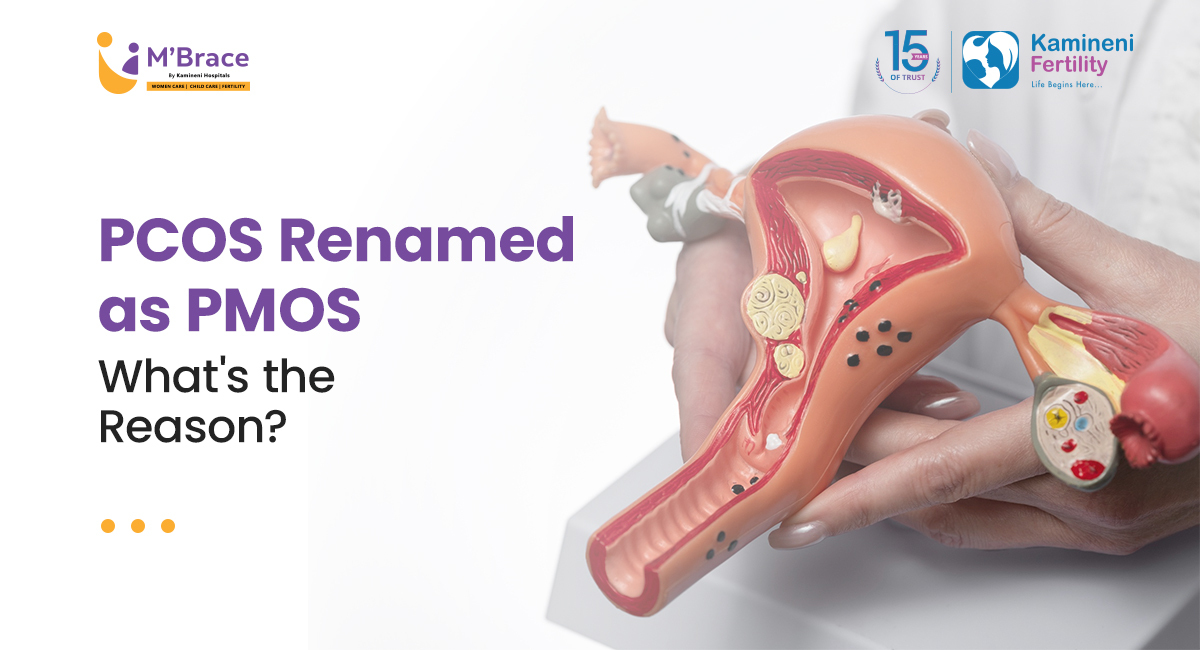
Most women on a fertility journey have heard the same four letters. PCOS. Possibly the most common hormonal diagnosis in the room, and one of the least understood.
On May 12, 2026, The Lancet published the outcome of a 14-year global effort and the condition was officially renamed. Polycystic ovary syndrome is now Polyendocrine Metabolic Ovarian Syndrome: PMOS.
And for women trying to conceive, that shift carries more weight than a name change usually does.
Because PCOS was not just a name. It was a diagnostic filter. And for a significant number of women on fertility treatment, that filter was keeping the real problem out of the picture.
PCOS is the most common hormonal cause of female infertility. The fertility specialists at Kamineni Fertility, with IVF units in King Koti and across Hyderabad, have been managing hormonal and conception challenges for years. Here is why is PCOS renamed to PMOS, and what this landmark change means if you are one of those women.
PMOS: Here Is Why It Changes Everything for Fertility?
The earlier terminology often placed greater emphasis on ovarian appearance than the broader hormonal and metabolic factors involved.
PCOS meant: look at the ovaries. Check for cysts. If cysts are present, the picture is clear. If they are not, the diagnosis stalls and for many women, so does conception.
The problem is that ovarian appearance was never the driver of infertility in this condition. The drivers were hormonal and metabolic: insulin resistance pushing androgen levels up, androgens suppressing ovulation, and ovulation never happening regularly enough for conception to occur.
None of that appears on a scan. None of it is captured by the word polycystic.
Women with irregular cycles and anovulation but clear ovaries were attending fertility clinics, being told the scan looked fine, and leaving without a pathway forward. The appointment ended. The underlying cause did not.
PMOS names those drivers directly. Polyendocrine means multiple hormone systems are involved, not just the ones the gynaecologist monitors. Metabolic means insulin resistance, androgen excess, and energy dysregulation are part of the clinical picture from the start.
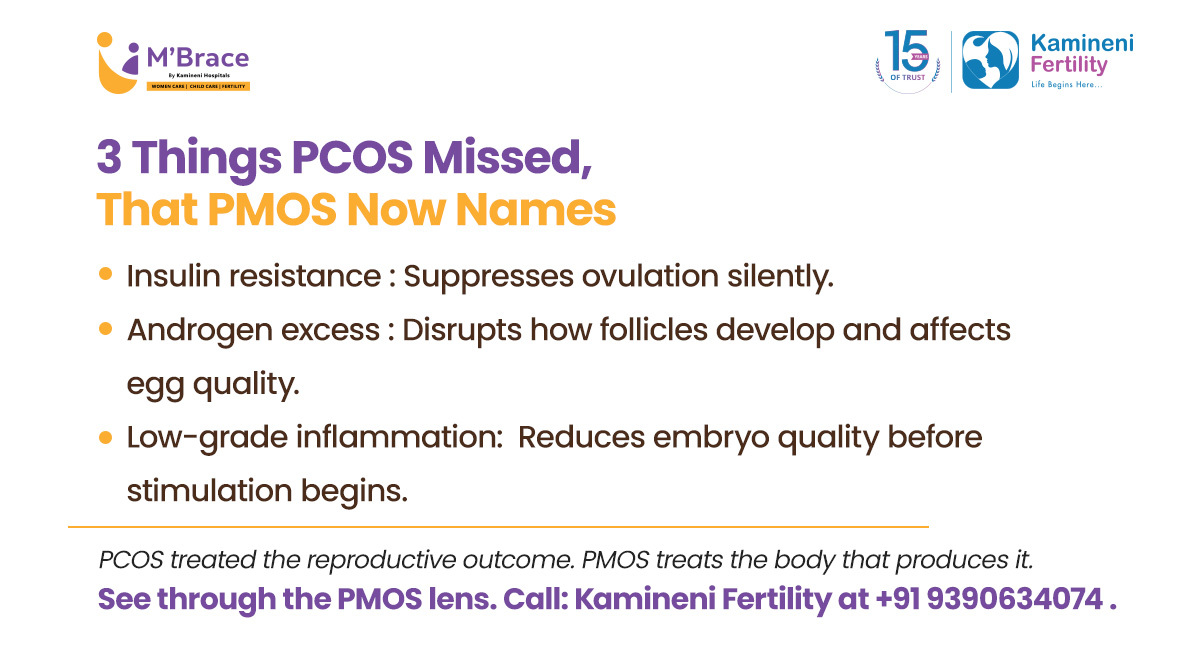
PCOS treated the reproductive outcome. PMOS treats the body that produces it.
See through the PMOS lens. Call: Kamineni Fertility at +91 9390634074
What Is the Difference Between PCOS and PMOS for Fertility Treatment?
The condition affecting your fertility has not changed. But what the medical system is now required to look for and treat has.
| PCOS (old name) | PMOS (new name) | |
|---|---|---|
| Fertility focus | Ovarian stimulation first | Hormonal + metabolic optimisation before stimulation |
| Missed cause | Irregular ovulation | Insulin resistance driving anovulation |
| Treatment approach | Reproductive symptoms only | Metabolic + reproductive care combined |
| Who got missed | Women with no cysts on scan | Far fewer - broader diagnostic criteria |
| IVF impact | Treated symptomatically | Root cause addressed before IVF begins |
Put simply: PCOS treated the reproductive outcome. PMOS treats the body that produces it.
Does the PMOS Rename Change Your IVF or Fertility Treatment?
Your current treatment continues. The rename does not undo a single thing you have been doing. What it changes is what happens before treatment begins.
Under the PCOS framework, the fertility pathway typically started with ovarian stimulation. If the follicles responded, the cycle moved forward. If they did not, the protocol was adjusted and tried again. What rarely happened first was a full metabolic workup because the name did not require one.
Why doctors are changing PCOS name, because PMOS requires it. Insulin sensitivity is now assessed before stimulation starts, because insulin resistance is one of the primary mechanisms suppressing ovulation in this condition.
Androgen levels are tracked not just as a hormonal footnote but as a factor directly affecting follicle development and egg quality.
Mental health, which the relentless cycle of failed treatment and unexplained infertility had been devastating for women with this condition for decades, is now a formal clinical priority under PMOS, not a referral made after everything else is exhausted.
A broader diagnostic frame means a more complete treatment design. And for IVF specifically, addressing metabolic health before stimulation may help improve fertility outcomes in ways that adjusting the stimulation protocol alone never could.
Concerned About PMOS and your Fertility? Book your Appointment With Kamineni Fertility
Irregular cycles, unexplained weight changes, and failed IVF cycles often arrive at the fertility clinic wearing the label "unexplained." PMOS gives that label somewhere more useful to go.
Kamineni Fertility, among the best IVF hospitals in Hyderabad, brings hormone profiling, metabolic assessment, and full IVF care under one roof. The fertility specialists at the King Koti unit work alongside endocrinologists from day one because for women with PMOS, the hormonal and reproductive picture cannot be separated and should never be treated as if they can.
If you have been told your fertility challenges have no clear cause, ask for the PMOS lens. It may be the question that changes everything.
Do not wait. Call Kamineni Fertility: +91 9390634074
Frequently Asked Questions
Q: Does PMOS affect my chances of getting pregnant?
PMOS can affect fertility through hormonal and metabolic disruptions, but many women successfully conceive with proper diagnosis and treatment. A PMOS-informed fertility team looks for insulin resistance suppressing ovulation, elevated androgens disrupting follicle development, and inflammation affecting embryo quality, before stimulation begins, which is where the difference in outcomes is made.
Q: Will my current PCOS fertility treatment change because of the rename?
Not immediately. Your existing treatment and protocol continue without interruption. What PMOS changes is the standard of assessment your fertility team is now expected to carry out - metabolic evaluation, androgen profiling, and mental health support are no longer optional add-ons. They are part of the formal care pathway.
Disclaimer: This article is intended for educational purposes only and should not replace medical consultation with a qualified fertility specialist.