Pregnancy Diet Chart Month by Month for Healthy Pregnancy
You're pregnant and thinking about what to eat. Nausea may make every meal a negotiation, or you may be in the second trimester and eating normally, but still not know if your meals are built around what the baby needs.
Pregnancy nutrition requirements vary with every trimester because the baby changes in all 3 trimesters. A single diet chart cannot treat all nine months the same way.
Most patients at Kamineni Fertility receive nutrition guidance from the first confirmed pregnancy, because what goes in during those early weeks has direct clinical consequences. This pregnancy diet chart is what our team shares with patients from day one, built around Indian food, trimester by trimester.
What Should You Eat in the First Trimester to Protect Your Baby?
The first trimester is the most important window for your baby's brain and spinal cord, and folic acid is the significant nutrient you need right now.
The neural tube, the part that becomes your baby's brain and spine, closes in the first 28 days of pregnancy. Low folic acid during this window raises the risk of neural tube defects.
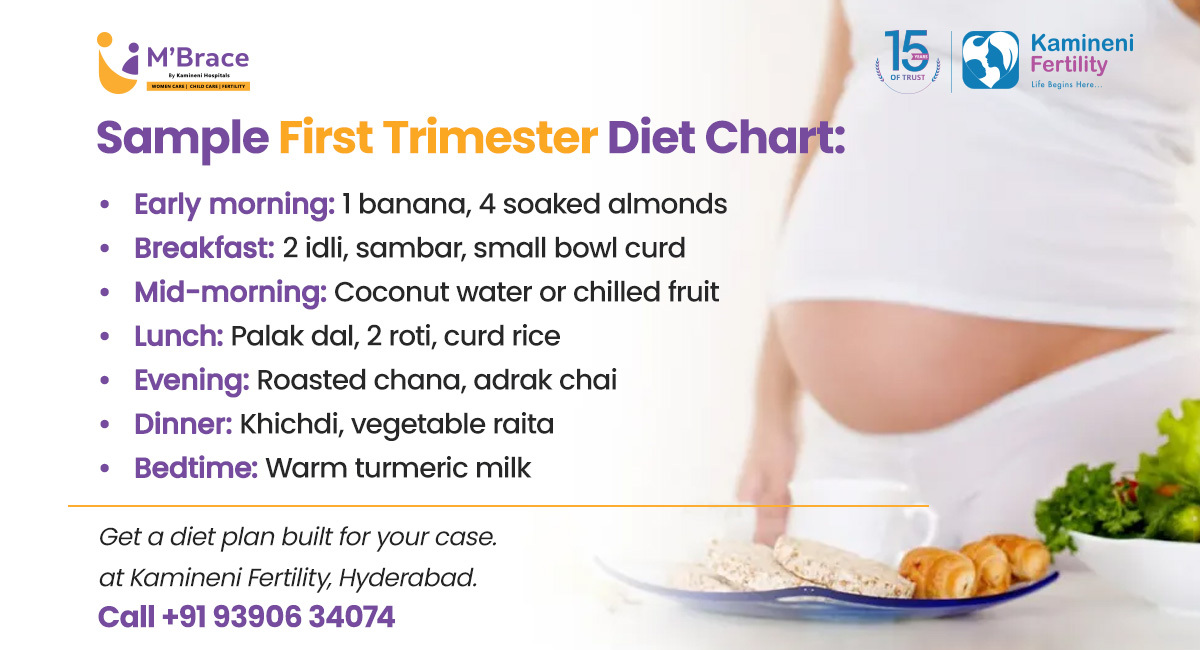
What First Trimester Diet Chart Needs Most:
- Folic acid: About 400 to 800 mcg daily from palak, methi, moong dal, and rajma.
- Vitamin B6: Banana, potato, poha, and dalia.
- Iron: Ragi, horsegram, and spinach. Always pair iron-rich foods with a vitamin C food.
- Ginger: Adrak chai, fresh ginger in dal, or a small raw piece before meals can help reduce nausea during pregnancy.
What to Avoid in Months 1 to 3
Avoid raw papaya, raw pineapple, raw or undercooked eggs, unpasteurised milk, high-mercury fish, and caffeine above 200 mg a day.
What Changes in Your Diet in the Second Trimester and Why?
The second trimester is when nausea lifts, appetite returns, and energy comes back. Use this window to build the nutritional reserves that carry you through the third trimester.
From month four, the baby's bones start forming. Teeth buds appear. Your blood volume increases by up to 50%. That places heavy demand on your iron and calcium stores.
- Calcium: 1,000 mg daily from milk, curd, paneer, ragi, til, and rajgira. Calcium needs vitamin D to absorb properly, so get 15 minutes of morning sun daily.
- Iron: 27 mg daily from month four. Include dates, beetroot, rajma, masoor dal, and spinach.
- Protein: Paneer, eggs, dal, chickpeas, curd, chicken, and fish. The baby's organs and muscles are growing fast, so spread protein across all three meals.
- Omega-3: 3 to 4 walnuts daily, alsi powder stirred into dal or kneaded into roti dough, and rohu if you eat fish.
How Should Your Diet Change in the Third Trimester When Space Is Tight?
From month seven, the uterus presses up against your stomach and the muscle below your lungs. Three full meals can cause acid reflux. Constipation is common. Fatigue returns. The diet in the third trimester has to manage all of this while meeting the pregnancy's highest nutritional demands.
What to Focus On
- Protein at every meal: Dal, paneer, eggs, curd, and legumes.
- Omega-3: Walnuts daily and alsi powder in roti dough or dal.
- Fibre: Oats, whole wheat roti, and fruits with skin. Drink 2.5 to 3 litres of water a day.
- Dates: Four to five daily.
Keep portions small. Eat slowly. Sit upright for 30 minutes after meals to manage reflux.
Which Foods Should You Avoid in an Indian Pregnancy Diet?
Some foods that appear in everyday Indian cooking are unsafe during pregnancy. Here is what to avoid and why.
- Raw papaya: Raw papaya contains papain and latex-like compounds. Both can trigger uterine contractions, so skip it for all nine months.
- Pineapple in large amounts: Bromelain, a natural enzyme in pineapple, can soften the cervix. A few small pieces occasionally are fine.
- Unpasteurised dairy: Raw milk and paneer made from unboiled milk can carry listeria, a bacteria that crosses the placenta. Only use paneer made from boiled milk.
- High-mercury fish: Shark, swordfish, and king mackerel are high in mercury. Mercury harms the baby's developing nervous system.
- Raw or undercooked eggs: Avoid runny yolks and raw egg in chutneys or desserts.
- Caffeine above 200 mg a day: One filter coffee or two cups of Indian chai is your daily limit. Above that, it can affect the baby's heart rate.
- Alcohol: There is no safe amount. Avoid it at every stage.
Book Your Pregnancy Nutrition Consultation at Kamineni Fertility
This pregnancy diet chart gives you the framework. What it cannot give you is a plan built for your specific condition. If you have gestational diabetes, thyroid issues, anaemia, or a twin pregnancy, your diet needs are different from a standard chart.
Dr. Vasundhara Kamineni, Head of Obstetrics and Gynaecology and Medical Director of Kamineni Fertility Centre, specialises in high-risk pregnancy care. The same team that manages your fertility treatment handles your pregnancy nutrition, with no handoff to a different clinic or a different set of doctors.
Patients at the best fertility centre in King Koti continue with the same team from the first positive pregnancy scan through every trimester. Women in south Hyderabad at the best fertility hospital in LB Nagar also receive the same clinical standard at the same centre.
Kamineni Fertility Centre, rated 4.6 out of 5 across 325 patient reviews on Justdial, has worked with 12,000+ patients. To connect for a pregnancy nutrition consultation, call: +91 93906 34074.
Frequently Asked Questions
What is the most important nutrient in the first trimester of pregnancy?
Folic acid, 400 to 800 mcg daily. The neural tube closes in the first 28 days, often before the pregnancy is confirmed. Low folic acid during this window directly raises the risk of neural tube defects.
Can a vegetarian Indian diet meet all pregnancy nutritional needs?
Yes, with attention to a few gaps. Get protein from dal, paneer, curd, and legumes at every meal. Pair iron-rich foods like ragi and spinach with a vitamin C source. Get omega-3 from walnuts and alsi powder.
How many extra calories does pregnancy need?
Around 100 to 150 extra calories in the first trimester, 300 to 350 extra in the second, and 450 to 500 extra in the third. What matters more than the number is what those calories are made of.
Is eating rice and roti every day safe during pregnancy?
Yes. Plain rice or roti without protein, sabzi, and curd is the problem, not the grain itself. Every meal needs a protein source, a vegetable, and a dairy component alongside the grain.
Click Here to get more information on:
Diet Guidance at Kamineni Fertility
Book a Pregnancy Nutrition Consultation
For inquiries/ appointment, call us on:
 +91 93906 34074